Wednesday, July 12, 2017
The Start of Something Big
Several STEP exams have come and gone, two years of clinical rotations, and kid. It seems so crazy to sit back and consider where all I have been over the past few years. When we got back to the states, I studied for STEP 1 while Frances worked as a nanny. Once my score came back, we found out that we would be moving to California for my core clerkships. This was also when we found out that our son was on the way. Core Clerkships were hard but rewarding. I could not decide what I wanted to do as a specialty. However, I kept finding myself in the ER on every rotation, preferring it to call rooms and the library. Our son arrived just as I started Trauma Surgery. Needless to say it was a struggle for Frances. I do not know how she was so strong. After a brief period of flirting with the idea of pursuing surgery, I finally settled on what had already been in front of me since day one of clerkships, EM was my specialty. After rotations in California, NYC, Connecticut, Louisiana, and Nebraska I finally finished medical school and applied for the match. After a 6-month stint working again as a Paramedic after graduation, I finally began my dream of being a physician on July 1, 2017. I matched EM at UMMC in Jackson, MS in the class of 2020. Here is to the next big adventure in the long journey!

Monday, January 20, 2014
Semester the 5th
We are now on the down-hill slope. I have already started planning my Step I study schedule and plan to take it at the end of August/beginning of September. Hopefully, I will be able to make the October 1 start date deadline to make the 2016 match. Last semester went very well. Although I didn't wind up honoring Neurology, I came very very close and did very well in all my other courses. I ended the semester with almost an 87% cumulative for the semester and an 85% overall for the first four semesters. I hope to build on this momentum this semester even though my schedule is less than ideal. I finish my first class of the semester later this afternoon, Medical Ethics.
The downside to being this far along is seeing some friends head home. Both those who have failed and those who have finished. I know next semester will be even more challenging without all my close friends. Fortunately, I have my best friend with me until the end. I do not know how I could have come this far in the journey without her. Frances has been there for me every step of the way, even when I stumbled in the second semester.
One step at a time, one class at a time, I am slowly getting to my life goal of becoming a physician. I know there is a lot left ahead, but it never ceases to amaze me how far I have come. Until next time, be well, do good work, and keep your stick on the ice!
The downside to being this far along is seeing some friends head home. Both those who have failed and those who have finished. I know next semester will be even more challenging without all my close friends. Fortunately, I have my best friend with me until the end. I do not know how I could have come this far in the journey without her. Frances has been there for me every step of the way, even when I stumbled in the second semester.
One step at a time, one class at a time, I am slowly getting to my life goal of becoming a physician. I know there is a lot left ahead, but it never ceases to amaze me how far I have come. Until next time, be well, do good work, and keep your stick on the ice!
Thursday, October 3, 2013
Semester the 4th
It has been over a year now since we came to the island. It seems like so long ago. Since I last wrote, we moved apartments, got a dog, and completed the third semester with high marks. In addition to school, I have been serving as the Presiding Senior of the Sigma Chi Mu chapter of the Phi Chi Medical Fraternity and a Harvey Tutor. I am very proud of what we have been able to accomplish over the past semester as an organization. We raised $1000 for charity last semester and completed over 500 hours of community service. This accounts for 1/6th of all monetary donations from the school to local organizations and nearly 1/4th of all community service hours done by students. We have started a series of talks via skype with physicians back in the states as well as students in the clinical years to clarify the road ahead for our fellow students.
This semester is already flying by. It is hard to comprehend that in just under a year, we will be leaving and preparing to take the Step. This coming break will be a nice long (3 week) respite despite all of the doctor appointments and family drama. I can hardly wait to see snow (Frances disagrees strongly on this point). Here is to the 4th semester, see you on the other side.
This semester is already flying by. It is hard to comprehend that in just under a year, we will be leaving and preparing to take the Step. This coming break will be a nice long (3 week) respite despite all of the doctor appointments and family drama. I can hardly wait to see snow (Frances disagrees strongly on this point). Here is to the 4th semester, see you on the other side.
Thursday, May 9, 2013
Semester Three
So here we are starting the third semester of medical school. Not even a year ago, I found out that was finally be given my chance. It has been tough, but medical school is supposed to be. Just over a year from now we will be headed home to take Step I. I am so grateful and looking forward to the remaining challenge in front of me.
Sunday, June 17, 2012
The calls that knock you down and teach you
The call came in like any other, "68 y.o. Male feeling ill". As we arrived on the truck, there was no hint of the chaos that was about to unleash itself in the house on a quite street. The Paramedic on the ambulance, is often known for his ability to be calm under pressure, this night he looked panicked as he met us at the door and said," we need to go right now!" the man was pale,cool and diaphoretic. When we attached him to the four lead, he had tombstone t-waves. It looked like he was having a heart attack in the bottom part of his heart. When we placed the 12-lead on him, the ectopy had cleared and he was in normal sinus tachycardia. We where puzzled. Then things got worse. He began to complain of not being able to breath. His lungs where demonstrating pulmonary edema. One of the other medics on scene began to reach for a nebulizer mask, when the patients pupils dilated shifted to the left and he vomitted. now we where thinking neurological cause. As we sped towards the stroke center, he began to drop his Herat rate from about 160bpm to 40bpm rapidly. I remember asking, "do we have a pulse?" No pulse. "Ok gentleman, here we go." As we pulled into the ER, we got a pulse back, then lost it. We worked him in the ER for another 20 minutes before we got a pulse back, just as the attending physician was about to call it. During that 20 minutes, the ER attending took a portable ultrasound, and discovered a 7cm dissecting aortic aneurysm. They patient maintained a pulse into the OR where he died on the table. Many lessons where learned, but I often am left to wonder if my seeing all of this knowledge was worth the death of a father on the eve of fathers day? I have faith that one day, be it today or 30 years from now, that what we saw last night will effect the life of a patient and their family.
Location:S 25th St,Bellevue,United States
Tuesday, June 5, 2012
Changes and Challenges
Frances and I, despite a fair amount of jet-lag found a great place at a fair price and began to determine what we need to bring with us in the fall. I have included picture below. I still cannot help but shout from the rooftops that I am going to be a doctor!!!!
I had a hard time returning to work and dealing with all the normal everyday crap knowing that I am moving on in less than three months. I began to think that nothing I had to experience in that time would teach me, and then the call came in for a GSW following a pursuit. I expected to find the normal small caliber injuries that I have often dealt with in my career in EMS. Instead, I found high powered armor piercing round injuries. It was unreal, I had never actually seen a real pericardial syntesis until that afternoon when the Helo crew performed one on this patient. It was one of the most devastating calls that I have been involved with to date, but it taught me once again that in the face of the worst, I can be calm, cool, and collected. Additionally, in the midst of chaos, I could teach and simplify the most complex of concepts. While it is difficult to see these traumatic things, I can move forward in the knowledge that given the worst, I will be fine. All that I need to overcome now is the academic challenges of the first two years.
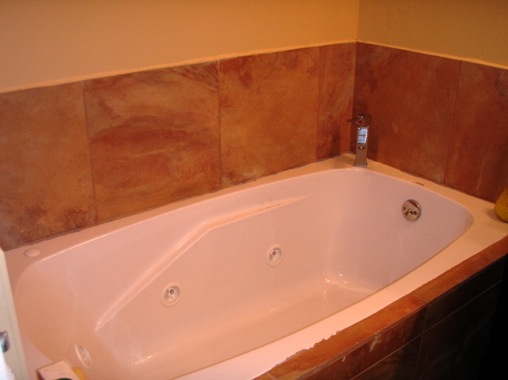
Enough of the depressing. Frances and I found a one bedroom apartment with all the amenities to make it comfortable for a newly married couple. It has a great view, a nice bathroom, and a kitchen that many a chef would be jealous of. It even has a wine-cooler! Here is to the adventure this fall, and any still waiting for me at work. Enjoy the photos below:


I had a hard time returning to work and dealing with all the normal everyday crap knowing that I am moving on in less than three months. I began to think that nothing I had to experience in that time would teach me, and then the call came in for a GSW following a pursuit. I expected to find the normal small caliber injuries that I have often dealt with in my career in EMS. Instead, I found high powered armor piercing round injuries. It was unreal, I had never actually seen a real pericardial syntesis until that afternoon when the Helo crew performed one on this patient. It was one of the most devastating calls that I have been involved with to date, but it taught me once again that in the face of the worst, I can be calm, cool, and collected. Additionally, in the midst of chaos, I could teach and simplify the most complex of concepts. While it is difficult to see these traumatic things, I can move forward in the knowledge that given the worst, I will be fine. All that I need to overcome now is the academic challenges of the first two years.
Enough of the depressing. Frances and I found a one bedroom apartment with all the amenities to make it comfortable for a newly married couple. It has a great view, a nice bathroom, and a kitchen that many a chef would be jealous of. It even has a wine-cooler! Here is to the adventure this fall, and any still waiting for me at work. Enjoy the photos below:



Monday, May 28, 2012
Things are happening fast...
A mere two weeks ago, I received a phone call that has utter changed my plans for this fall. The day before my graduation from graduate school I was planning on starting another masters in the fall. At approximately 3:30 that afternoon, I received the call that I have been working toward for the better part of a decade. "Noah, we are pleased to inform you that you have been accepted to our medical school for the class starting this fall!" In an instant my entire system of contingency plans became useless. No more studying for the MCAT, working as a Paramedic while at school full time, no more disheartening letters from medical schools informing me that they didn't want to admit me or I had been placed on the waitlist. The paperwork that has ensued has been enormous. If that did not make this opportunity a reality fast enough, I am leaving tomorrow to look at housing prospects for Frances and I this fall. This experience has taught me that the journey thus far may have been long and difficult, it has been worth every step. I am under no delusions as to the task that lies ahead of me, but I appreciate this chance more than any other person I know. I am just thrilled for the opportunity before me!
Location:Bellevue, NE
Monday, February 27, 2012
The Night the Codes Kept Coming......
In emergency medicine there are certain patients who are rare. In the field this is especially true of cardiac arrest. One Sunday night not long ago, I ran two in the space of 4 hours, at the slow station.
The first was dispatched as difficulty breathing. When we got up to the apartment I found a patient lying on the bed obviously not breathing. I immediately transmitted a working code. The patient's roommate stated that she had begun having difficulty breathing approximately 10 minutes prior to calling 911. As the only paramedic on scene it was officially, cowboy-up time. The initial rhythm was Asystole. With IO, ET tube, Vaso, and Bicarb on board we achieved ROSC at a rate of 48 and a BP of 82/P. I started the first epi-drip for the department (the protocol had been added the week previous) and maintained a pulse into the ER. The patient made it up to the ICU.
The second came just as we cleared the hospital from an ETOH call. It was surreal. Unlike the first this was declared code-99 at the time of dispatch. We I arrived the engine crew was already doing CPR and had dropped a King tube. This gentleman had been up talking to his wife when he collapsed. Just like the previous code the rhythm was Asystole. It took Vaso, 2 Epis, D50, Calcium Gluconate (also a first time push for the department) to achieve ROSC. As before, the patient's pulse came back slow with a low BP and so an Epi-drip was started. The patient made in the doors of the ER and coded again. We again got a pulse back with an Epi dose. Just after achieving ROSC for the second time, A nurse yelled across the ER that a patient had just coded. The ER doc left me in charge of my patient and took off with several of the engine crew to work the code on the other side of the ER. Unfortunately neither my patient nor the one on the other side of the ER survived.
As, I was talking to the ER physician a short time later, he told me that they had 6 codes (including my 2) in the last 12 hours. It was a night that I will not soon forget. Although neither of my codes survived to discharge, the night taught me an important lesson, rule out H&Ts early and aggressively (just don't push sodium bicarb and calcium gluconate too soon after each other as happened with the ER code).
The adventures continue to give me insight and I know one day they will make a difference, first in the field and eventually as a physician. Until next time.....
The first was dispatched as difficulty breathing. When we got up to the apartment I found a patient lying on the bed obviously not breathing. I immediately transmitted a working code. The patient's roommate stated that she had begun having difficulty breathing approximately 10 minutes prior to calling 911. As the only paramedic on scene it was officially, cowboy-up time. The initial rhythm was Asystole. With IO, ET tube, Vaso, and Bicarb on board we achieved ROSC at a rate of 48 and a BP of 82/P. I started the first epi-drip for the department (the protocol had been added the week previous) and maintained a pulse into the ER. The patient made it up to the ICU.
The second came just as we cleared the hospital from an ETOH call. It was surreal. Unlike the first this was declared code-99 at the time of dispatch. We I arrived the engine crew was already doing CPR and had dropped a King tube. This gentleman had been up talking to his wife when he collapsed. Just like the previous code the rhythm was Asystole. It took Vaso, 2 Epis, D50, Calcium Gluconate (also a first time push for the department) to achieve ROSC. As before, the patient's pulse came back slow with a low BP and so an Epi-drip was started. The patient made in the doors of the ER and coded again. We again got a pulse back with an Epi dose. Just after achieving ROSC for the second time, A nurse yelled across the ER that a patient had just coded. The ER doc left me in charge of my patient and took off with several of the engine crew to work the code on the other side of the ER. Unfortunately neither my patient nor the one on the other side of the ER survived.
As, I was talking to the ER physician a short time later, he told me that they had 6 codes (including my 2) in the last 12 hours. It was a night that I will not soon forget. Although neither of my codes survived to discharge, the night taught me an important lesson, rule out H&Ts early and aggressively (just don't push sodium bicarb and calcium gluconate too soon after each other as happened with the ER code).
The adventures continue to give me insight and I know one day they will make a difference, first in the field and eventually as a physician. Until next time.....
Saturday, October 22, 2011
Halloween Came Early This Year
"Medic 21, Engine 31, medical emergency. Third party report of an elderly obese female stuck in a door. They are attempting to get her out with a hatchet. No other information at this time." When we arrived, we found a condemned house. We walked inside to find a hoarders paradise with the wonderful aroma of cats. Eventually, we found a very confused mid thirties male passed out on a couch in the basement. He was arrested for trespassing, and we went back in service. The irony is this was not at night, or the week of Halloween. You never know what the next crazy call could be......
Thursday, October 20, 2011
The Secret is in the Telling
Recently, I responded to a call at a local plant. It was dispatched as dizziness. I immediately thought this would be a ploy to get out of work. When I walked in the nurses station, I was immediately taken aback by the patient's presentation. In a cool room, he was pale and very diaphoretic. My initial thought was cardiac etiology. The patient did not complain of chest pain. This is possible in some heart attacks, so I obtained a 12-lead. It was pristine. Next I continued to query the patient as to what medical history he had. This provided no useful information. As we moved the patient to the cot he became violently ill. All other vitals where normal. Lung sounds, temp, blood sugar, BP....all inconclusive. I gave prophylactic zofran to stabilize him enroute to the hospital. I continued to talk to the patient. What he told me next took me aback, and put all the pieces of the puzzle together. With the simple phrase, "my ears started to plug up before this happened," it became clear.
His nausea and vomiting where caused by a failure of his Eustachian tubes to drain the fluid built up and caused pressure on the cochlea in his ear. A simple cause of inflammation due to allergy exacerbation. However, the secret was not in the 12-lead, or the physical exam, or even the past medical it was in the telling of a simple phrase. If I had not asked the right questions, I would have arrived without a working diagnosis and could have caused a greater amount of time to occur before the patient condition was improved. The lesson here is that the secret can sometimes be found in the telling.
His nausea and vomiting where caused by a failure of his Eustachian tubes to drain the fluid built up and caused pressure on the cochlea in his ear. A simple cause of inflammation due to allergy exacerbation. However, the secret was not in the 12-lead, or the physical exam, or even the past medical it was in the telling of a simple phrase. If I had not asked the right questions, I would have arrived without a working diagnosis and could have caused a greater amount of time to occur before the patient condition was improved. The lesson here is that the secret can sometimes be found in the telling.
Thursday, October 6, 2011
Your best efforts are not always enough....
One lesson that is always hard to learn in medicine is that despite all the knowledge, diagnostic tools, and medicines at the disposal of the clinician, patients still die. Although there have been other patients that I have not revived in the past, a few weeks ago, I had my first solo "oh $&?!" patient as a paramedic. As I walked into the residence, I was met by a panicked engine company crew and a patient who was in a tripod position on the floor. The patient was spitting up pink frothy sputum and was one word dyspnic. The engine company had already placed the patient on high flow oxygen and had attempted to get a baseline set of vitals. It was immediately apparent that the patient needed CPAP if not intubation.
The patient did not like the idea of a mask strapped to his face, so an online order was received from the receiving ER for Valium. The patient was quickly transported on CPAP. He was so diaphoretic that the leads slid off and I was only able to glimpse a ten second strip that showed elevation in 2,3, and AvF leads. I could not obtain a 12-lead and arrrived in the ER in less than 5 minutes.
The ER doctor immediate ordered RSI (rapid sequence intubation) and I was sent to advise the family as to what was going on with their loved one. It is always hard to talk to families and I found myself, as I have done in the past, made the procedure seem like a routine step and not the drastic step it represented. I quickly had to leave for a possible cardiac arrest call. I came back into the ER several hours later to discover that the patient had coded and died in the ICU. In retrospect, I did everything could in the short amount of time that the patient was in my care. This is small solace, but it is a lesson that I hope never to forget as my knowledge increases, my tools become more complex, and the list of medications and procedures at my disposal grows at an exponential rate in the long journey that lies before me.
The patient did not like the idea of a mask strapped to his face, so an online order was received from the receiving ER for Valium. The patient was quickly transported on CPAP. He was so diaphoretic that the leads slid off and I was only able to glimpse a ten second strip that showed elevation in 2,3, and AvF leads. I could not obtain a 12-lead and arrrived in the ER in less than 5 minutes.
The ER doctor immediate ordered RSI (rapid sequence intubation) and I was sent to advise the family as to what was going on with their loved one. It is always hard to talk to families and I found myself, as I have done in the past, made the procedure seem like a routine step and not the drastic step it represented. I quickly had to leave for a possible cardiac arrest call. I came back into the ER several hours later to discover that the patient had coded and died in the ICU. In retrospect, I did everything could in the short amount of time that the patient was in my care. This is small solace, but it is a lesson that I hope never to forget as my knowledge increases, my tools become more complex, and the list of medications and procedures at my disposal grows at an exponential rate in the long journey that lies before me.
Friday, September 30, 2011
"Battalion One to dispatch issue a level one recall for manpower." these words are not often uttered in a department which has multiple mutual aid agreements with other paid departments. This night it would serve as a reminder of the need to place good Pt. care above any drug or piece of technology. While other members of the department dealt with a working fire, myself and three others ran out of the "backup to the backup" ladder truck. On our way to our first call of the early morning, we quickly realized that there were no SCBAs on board. They had been stripped for the HazMat Tech refresher the week before and never replaced. This was a foreshadowing of later events.
Upon our arrival, we found a middle-aged woman lying on the floor complaining of abdominal pain. The patient had just been released from the hospital after receiving a kidney transplant. I opened the medical bag. To my dismay, it was nearly empty. I found a cheap stethoscope, a BP cuff, a penlight, and two bottles of expired sterile water. "What more could go wrong?" I thought to myself. One should never ask that question, both in ones head or aloud. We were then advised that the next closest Medic unit was 84 blocks away. The patient's lower abdominal was rigid and distended, her BP was low and her plus was high. For the next 20 minutes, I talked to her and heard about the amazing life she had led.
By the time the Medic unit had arrived, the patient's vitals had not changed, but her pain was significantly less. As I handed off Pt. Care to the other paramedic, I could not help but marvel about how in a world of modern medicine, a kind word and a listening ear can do so much to help the patient. I hope that I never forget that lesson as I move up the medical ladder. I want to be the practitioner who takes the time to sit down with my patients and listen. Some times the largest lessons come from the smallest gestures.
Upon our arrival, we found a middle-aged woman lying on the floor complaining of abdominal pain. The patient had just been released from the hospital after receiving a kidney transplant. I opened the medical bag. To my dismay, it was nearly empty. I found a cheap stethoscope, a BP cuff, a penlight, and two bottles of expired sterile water. "What more could go wrong?" I thought to myself. One should never ask that question, both in ones head or aloud. We were then advised that the next closest Medic unit was 84 blocks away. The patient's lower abdominal was rigid and distended, her BP was low and her plus was high. For the next 20 minutes, I talked to her and heard about the amazing life she had led.
By the time the Medic unit had arrived, the patient's vitals had not changed, but her pain was significantly less. As I handed off Pt. Care to the other paramedic, I could not help but marvel about how in a world of modern medicine, a kind word and a listening ear can do so much to help the patient. I hope that I never forget that lesson as I move up the medical ladder. I want to be the practitioner who takes the time to sit down with my patients and listen. Some times the largest lessons come from the smallest gestures.
Saturday, September 24, 2011
Your Patient Is Not As They Appear........
Throughout this blog, I will make reference to cases that I have had in the field or in the hospital. For obvious reasons, all identifying information has been removed in order to comply with HIPAA.
The other night, we were dispatched to a possible stroke. When the engine company arrived on scene, they performed a stroke scale and found the patient to have slurred speech and a sluggish right pupil. The patient was also hypertensive and repeatedly pointed to her head. Pt. vitals were as follows 168/92, P 118 Sinus Tach, R 24, LS clear. 12-lead normal. Pt. was moving her mouth in a repeated manner that had the appearance of "guppy breathing" Pt. has extensive psych history and multiple medications that include Geodon and Ritalin. What would your differential be? We did not transport to the stroke center since the pt. had an inconclusive stroke scale and was know to have a similar episode last week.
Upon arrival in the ER, the physician having seen her before, took one look and knew what was the issue and gave her Diphenhydramine IV. Have you figured it out yet?
The pt. was experiencing side effects from overdosing on her Geodon. The slurred speech, warm and flushed skin, sluggish pupil, and "guppy breathing" were all a result of too much Geodon. The treatment for Geodon OD is 50mg of Diphenhydramine IVP. As soon as this medication was given her symptoms began to clear up. The "guppy" breathing action is called Tardive Dyskinesia ans is a preexisting condition that is exacerbated by Geodon OD. As you can see, the patient may not always fit you differential in the end, thus your patient may not always have the horses their hoofbeats lead you to suspect.
The other night, we were dispatched to a possible stroke. When the engine company arrived on scene, they performed a stroke scale and found the patient to have slurred speech and a sluggish right pupil. The patient was also hypertensive and repeatedly pointed to her head. Pt. vitals were as follows 168/92, P 118 Sinus Tach, R 24, LS clear. 12-lead normal. Pt. was moving her mouth in a repeated manner that had the appearance of "guppy breathing" Pt. has extensive psych history and multiple medications that include Geodon and Ritalin. What would your differential be? We did not transport to the stroke center since the pt. had an inconclusive stroke scale and was know to have a similar episode last week.
Upon arrival in the ER, the physician having seen her before, took one look and knew what was the issue and gave her Diphenhydramine IV. Have you figured it out yet?
The pt. was experiencing side effects from overdosing on her Geodon. The slurred speech, warm and flushed skin, sluggish pupil, and "guppy breathing" were all a result of too much Geodon. The treatment for Geodon OD is 50mg of Diphenhydramine IVP. As soon as this medication was given her symptoms began to clear up. The "guppy" breathing action is called Tardive Dyskinesia ans is a preexisting condition that is exacerbated by Geodon OD. As you can see, the patient may not always fit you differential in the end, thus your patient may not always have the horses their hoofbeats lead you to suspect.
Subscribe to:
Posts (Atom)